Is Classical a Good Fit?

Classical Education May Be a Good Fit If You’re Concerned About
- The amount of screen time or educational technology in your child’s classroom
- Your child not reaching his or her full academic potential
- Gaps in foundational skills like reading, writing, or math
- Limited use of paper, pencil, and textbooks
- Too many benchmark assessments
If any of these resonate, a classical approach offers a different approach —one that emphasizes strong fundamentals, focused attention, and meaningful, lasting learning.
Does This Sound Like Your Child?
- They’re naturally curious about “big questions.”
If your child asks things like “Why do people believe different things?” or “What makes something right or wrong?”, they may thrive in a setting that explores philosophy, history, and literature in depth rather than just covering surface facts.
- They enjoy stories, myths, and rich language.
A love for reading—especially stories, legends, or complex narratives—is a strong indicator. Classical education leans heavily on great books and storytelling as a foundation for learning.
- They like structure and clear progression.
The classical model is sequential and cumulative. Kids who do well with routines, memorization early on, and building knowledge step-by-step often find it satisfying rather than restrictive
- They’re not fully engaged by test-driven schooling.
If your child seems bored with constant test prep—but lights up when material goes deeper—that’s a meaningful signal.
- They show patience for challenging material—and are willing to practice.
Kids who are willing (or can be gently guided) to revisit concepts and build mastery through consistent practice often benefit from that steady intellectual stretch.
If these traits sound familiar, your child may flourish in a classical learning environment that builds strong foundations and fosters a lifelong love of learning.
The Need for a Classical Education
According to the most recent results of the National Assessment of Academic Progress, “U.S. students have not recovered from the devastating impact the pandemic had on education. National scores are below pre-pandemic levels (2019) in all tested grades and subjects.”[1]
Furthermore, higher-performing students drove most of the progress made in 2024, and gaps are growing between higher-performing and lower-performing students — a trend that has been occurring for more than a decade.”[2] Lastly, civic knowledge has been flat since 1998. [3]

What Is Classical Education?
Classical education is a knowledge-rich approach that develops both academic skills and character. Students study great books, history, literature, science, mathematics, and the ideas that have shaped Western civilization. Along the way, they develop habits such as responsibility, perseverance, and thoughtful citizenship.
A strong foundation in language and content knowledge is central to classical education. Students build vocabulary and grammar through rich reading and the study of Latin, while learning history, science, and literature gives them the background knowledge they need to understand what they read and think critically. As cognitive scientist Daniel Willingham has noted, critical thinking depends on knowledge.
What Will My Child Study?
Northern Virginia Classical Academy uses Core Knowledge for language arts, science, history, and geography, along with Singapore Mathematics. Together, these provide a structured, content-rich curriculum that builds intentionally from one grade to the next.
Explore the curriculum for each grade:
Kindergarten | Grade 1 | Grade 2 | Grade 3 | Grade 4 | Grade 5 | Grade 6 | Grade 7 | Grade 8
How We Teach
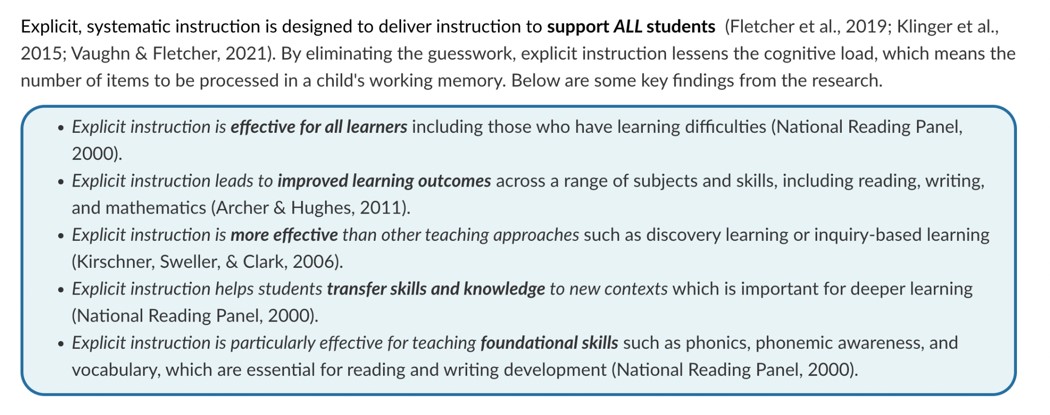
Classical education emphasizes explicit, teacher-led instruction. Teachers introduce and model new concepts, provide guided practice and feedback, and gradually build students’ independence.
Our approach is grounded in cognitive science: students learn best when new knowledge is explicitly taught, practiced, and connected to what they already know. Learning therefore progresses sequentially—from foundational knowledge and skills to increasingly sophisticated reasoning and analysis.
[1] National Assessment Governing Board. (n.d.). 10 Takeaways from the Newly Released 2024 NAEP Results. https://www.nagb.gov/powered-by-naep/the-2024-nations-report-card/10-takeaways-from-2024-naep-results.html
[2] Ibid
[3] The Nation’s Report Card. (n.d.). NAEP Civics: Civics Highlights 2022. https://www.nationsreportcard.gov/highlights/civics/2022/
Educational Philosophy
Our mission is to return to a focus on academic excellence – meaning highlighting the foundational skills of core subjects using mostly explicit instruction and predicated on student accountability, which we believe is the best way to develop 21st century skills among students.
The vision of the school is to equip students for citizenship through a teaching of the liberal arts and sciences and a grounding in civic virtue.
Contact info
- info@northernvirginiaclassical.org
- 571-293-2057